The intercultural mediation project improves understanding of treatments, strengthens families' confidence and facilitates access to health and education services for children with complex support needs.
Understanding a diagnosis, following a treatment plan, or communicating a concern to professionals may seem like an everyday action. But for many families of migrant origin with children with disabilities or neurodevelopmental disorders, these situations can become a barrier that conditions access to care and the development of their children.
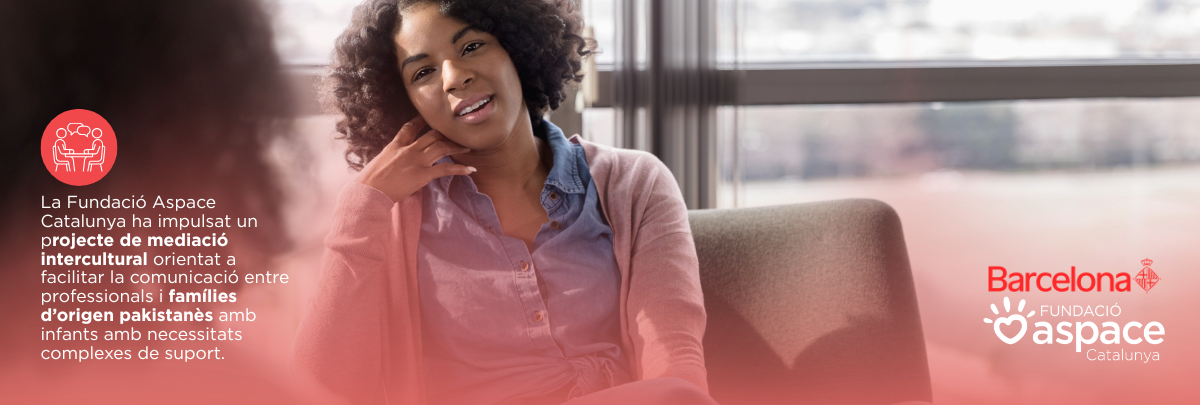
With this reality at the center , the Aspace Catalunya Foundation has promoted an intercultural mediation project aimed at facilitating communication between professionals and families of Pakistani origin with children with complex support needs . The initiative strengthens access to health, educational and therapeutic services from a comprehensive, specialized perspective that is respectful of cultural diversity.
When understanding is also caring
Language and cultural difficulties can generate insecurity , make it difficult to follow treatments or limit families' participation in important decisions about the health and well-being of children.
In day-to-day life, this translates into very specific situations : families who cannot express doubts during a visit, mothers who do not fully understand therapeutic guidelines or professionals who have difficulty explaining certain support needs.
To respond to this reality, Aspace Catalunya has incorporated the figure of the specialized intercultural mediator who accompanies families in therapeutic sessions and facilitates communication in languages such as Urdu, Hindi or Bengali.
Its work goes beyond linguistic translation. The project creates bridges of trust between families and professionals , helps to culturally contextualize interventions and enables families to participate more actively in the development of their children.
Between September and November, in-person mediation sessions have improved understanding of diagnoses, treatments and care processes, promoting a closer and safer relationship with professional teams.
Support spaces that strengthen family participation
The project has also promoted meeting groups between mothers and children , which have become spaces for mutual support and shared trust.
These spaces allow for sharing experiences, resolving doubts and generating bonds between families who often face similar situations in silence. For many mothers, participating has meant gaining security, better understanding the resources available and feeling more supported in the process of caring for and developing their children.
In practice, this translates into families being able to communicate more confidently with professionals, better understand the needs of children and participate more actively in decisions that affect their day-to-day lives.
An impact that improves access to services
The project has reached 250 families and has contributed to strengthening their relationship with health, education and specialized care services.
Intercultural mediation has allowed for clearer communication , increased family involvement and consolidated an environment of trust, key factors in ensuring quality care in highly complex contexts.
Despite funding limitations, which have forced the adjustment of some planned activities, the project has prioritized actions with the most direct impact on families and children, maintaining the quality of support and coherence with the comprehensive care model of Aspace Catalunya.
A model of care that puts people at the center
This initiative is part of Aspace Catalunya's comprehensive care model, aimed at responding to highly complex situations from a coordinated , specialized perspective focused on people and their families.
The project demonstrates that eliminating communication barriers is not just a linguistic issue : it is a way to guarantee rights, promote participation and build more accessible and humane care.
Aspace Catalunya thus reinforces its commitment to inclusive and respectful care for cultural diversity, moving towards a model in which no family is left behind for reasons of language, context or origin.
This project has been possible thanks to the support of Barcelona City Council.